

Spotify isn’t broken, it’s working exactly as intended
And it’s not you they want to pay

They say there’s no money in streaming. That’s simply not true.
This is week 3 of Richify and if you take just one thing away from the whole 10 weeks, let it be this: there’s a fortune being made from streaming every day. Tens of millions. It’s just not going to you.
Can we ‘fix streaming’ if this is how it was designed to work? The record companies chose to license it this way. And for some unknown reason the songwriters, performers and session musicians did a Mel Robbins and… let them.
When music distribution involved the mass production of physical product for which there was uncertain demand, record companies took on all the risk and investment. It made economic sense they would claim the majority of the revenue. Songwriters had no choice but to accept 8.5% scraps of label revenue - by way of a mechanical licence, paid by the labels in return for the ability to press up and flog copies of the songs contained in the shiny discs they made.
Digital distribution involves no such risk. Songwriters no longer need to accept scraps - they have direct access to the platforms, same as the labels and can set the terms accordingly.
Streaming platforms need the permission of both the recording rights holder and the publishing rights holder and there is absolutely no reason why one is more important than the other when there are no shiny discs being made. You need both sets of rights or the song can’t be streamed.
Why then does the record company get to decide how the songwriter is paid? Why on earth is the recording worth four times the song?
Make it make sense.
Why 14%?
Instead of negotiating a few percentage increases from the pitiful base level that they enjoyed when record companies controlled the means of production, the large organisations that represent songwriters should be judged on how successfully they argue for equal splits between songs and recordings.
When every sale is just a licence you enter a world where your negotiation strategy is the main determinant for what your split of revenue might be.
I’ll give you a tip: if you settle for anything less than 50% going to the songwriting side then you suck at being a publisher or a collective management organisation (CMO) representing songwriters. You ask for MFN (most favoured nation) parity against the recording when negotiating synchronization deals, what happened to your negotiating chops when it came to streaming?
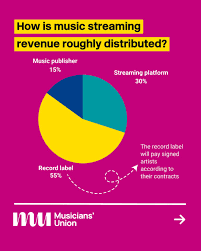
Outside observers might be shocked to learn that in the streaming settlement after the platform take 30%, currently only 14% of revenue goes to the song, whilst 56% goes to the recording. An 80:20 split in favour of the recording. That’s all the record labels think the song is worth - less than half of what the platform takes - and for some reason nobody is making a case the other way.
I’m thinking we need some new leadership representing songwriters!
Who owns, wins
The publishers don’t seem to give a damn, neither do PPL (despite half their purpose being to ensure distribution of performance royalties to actual performers). None of them care because in the end they are all owned by the same three major music corporations as the big labels anyway. And those three companies are doing just fine.
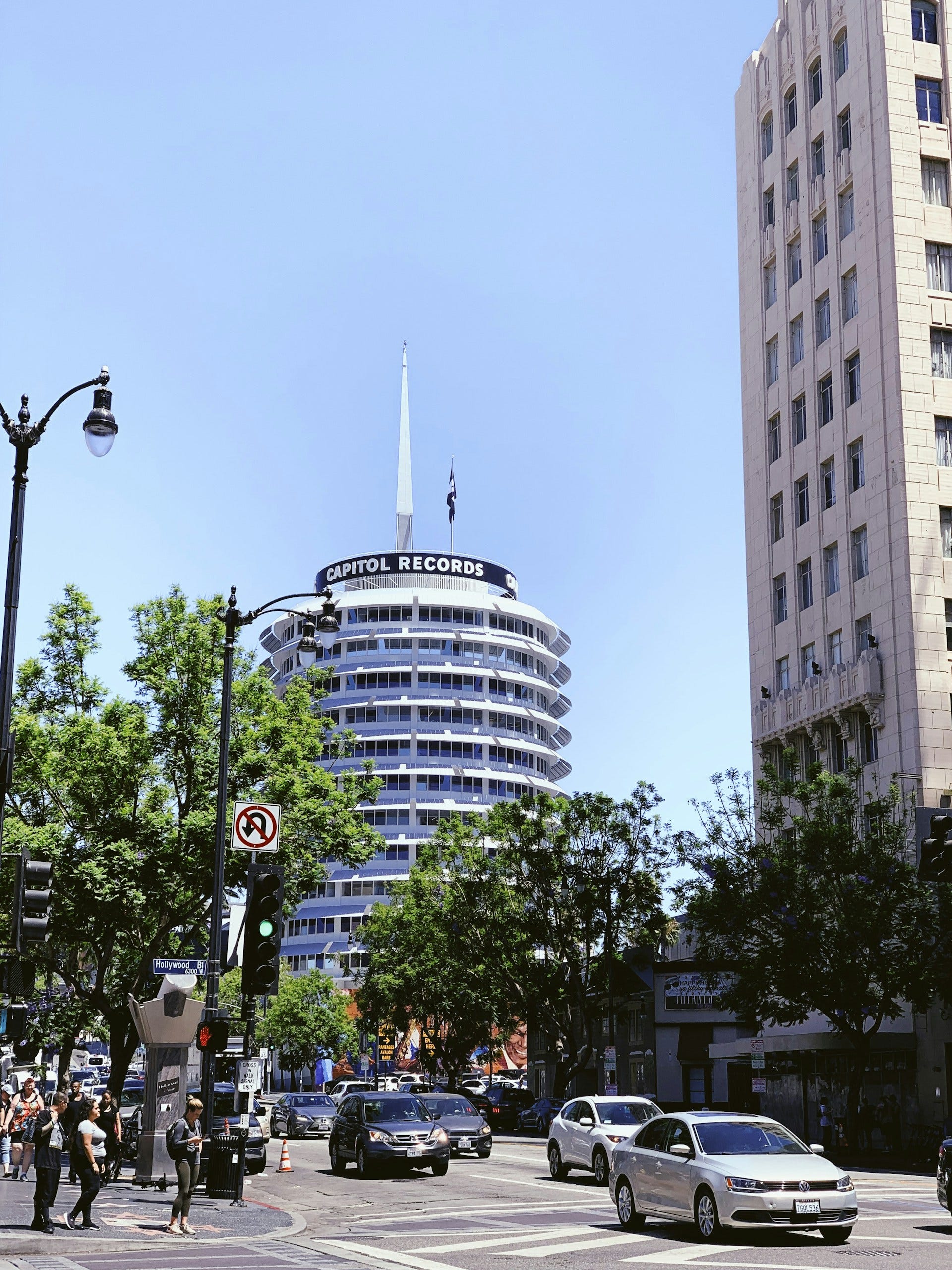
Universal Music Group owns Universal Music Publishing as well as their record label division which includes iconic labels like Island Records, Capitol, Def Jam, Polydor, EMI, Decca and Mercury. When Universal fell out with TikTok and started to remove its recording artists and published songwriter’s works from the service it became clear just how far reaching Universal Music’s share of the music market. Most of the 2025 crop of superstar artists are Universal acts: Sabrina Carpenter, Chappel Roan, Olivia Dean, Sam Fender, Noah Kahan, Morgan Wallen.
Looking at their 2025 financials Universal Music are making just shy of $20 million per day in streaming revenue.
Warner Music Group includes the label divisions including Atlantic, Parlophone and Warner Bros but also owns Warner Chappell Publishing. Their current stars include Ed Sheeran, Sombr, Alex Warren, Benson Boone. Whilst Raye had to launch her own record label to become a star it was Warner Chappell, supporting her as a songwriter, that made it possible.
Warner Music make $9 million per day in streaming revenue according to their 2025 Q1 results.
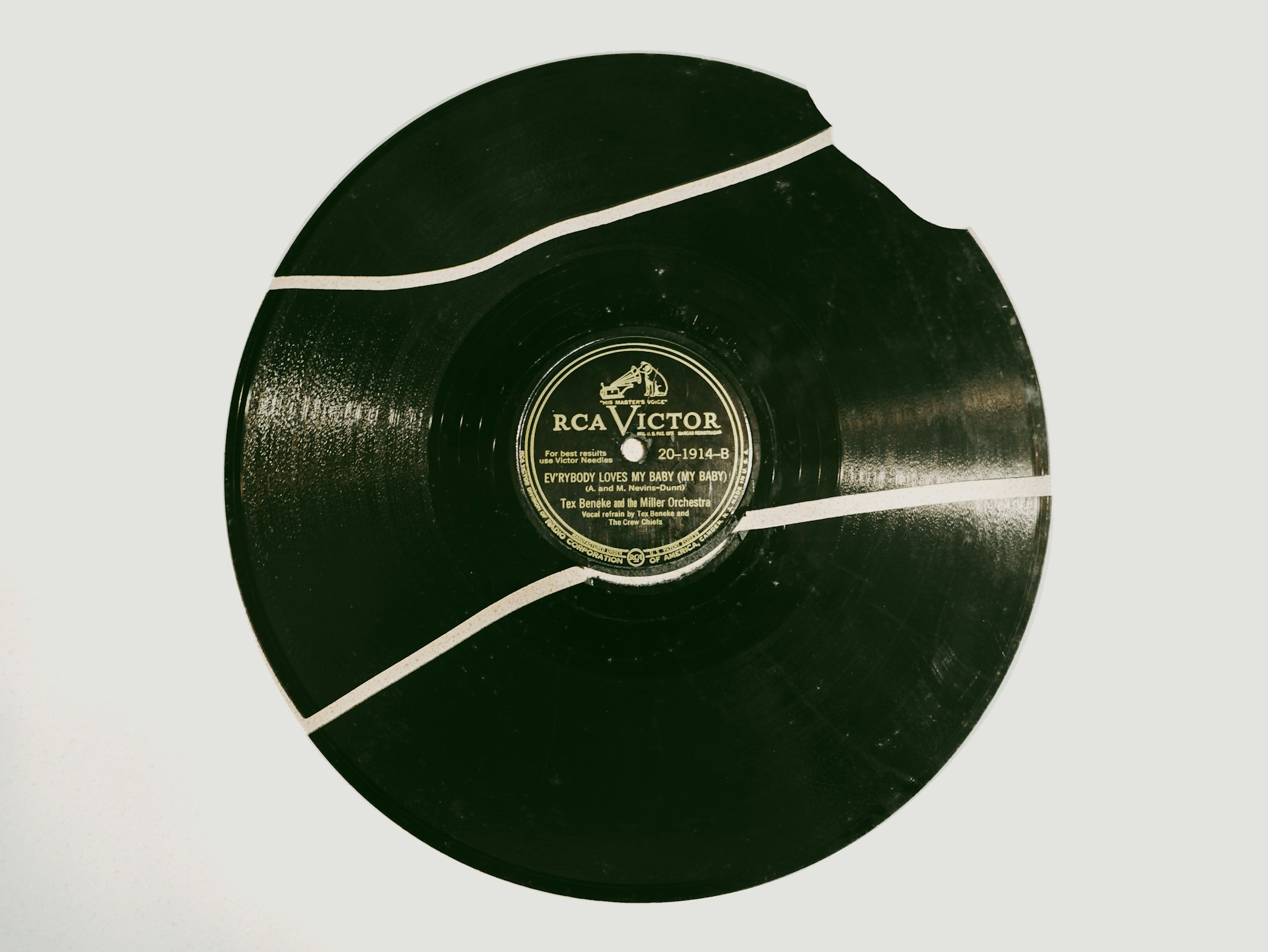
Then you’ve got the largest publishing company of them all. Sony Music Publishing - once half owned by Michael Jackson, now fully controlled by Sony Music Entertainment that also owns the major labels Columbia, Epic, RCA, Ministry of Sound, Insanity and Relentless. Current stars include Doja Cat, Calvin Harris, Central Cee, Wolf Alice & Myles Smith.
Sony Music pulled in an average of $14 million per day from streaming in Q1 2025
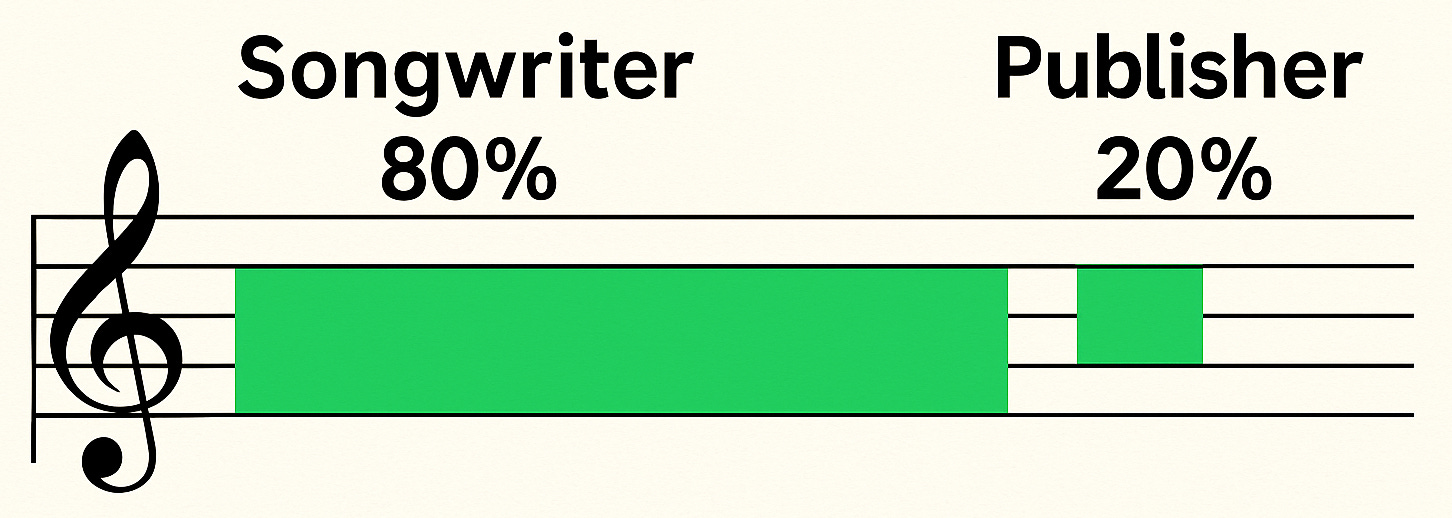
When a song is streamed, publishers collect a licence fee and share it with the songwriter, with typically 70–80% going to the writer.
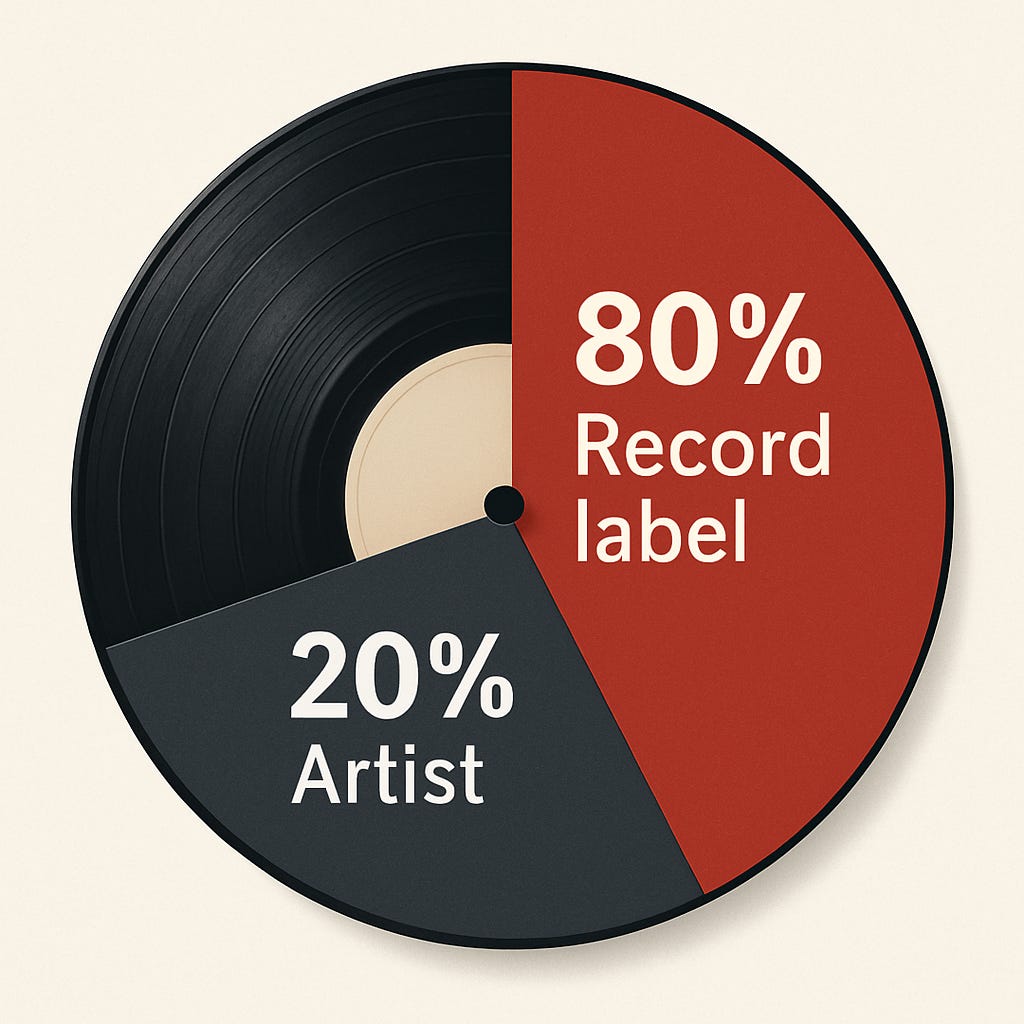
When a recording is played, most labels only pay the artist a royalty of 20% or lower so the talent to corporate reward ratio is reversed. It’s therefore in the major music companies’ business interest to collect more on the recordings side than on the publishing side. Which is why what should be a 50/50 split for both sides on the streaming licence instead comes out as 56/14 or 80/20 in favour of the record labels with higher profit for the corporations.
The current model means the corporates (Platform, Label & Publisher - all with some common ownership) take more than 75% of all the cash, with the talent left to split 22.5%. If the split of licence revenue was 50/50 between the song and the record, because of the better deals in publishing the talent would take home an increased 35% of the money whilst the corporates could still dine out on 65%. Increasing songwriter earnings would mean a dip for labels - and possibly for artists. But in many cases, artists are also the songwriters, so they’d benefit too.
But as I’ve discussed before, the record companies have got fat on the distortions and unfortunate assumptions of the early streaming negotiations and they are unlikely to buckle now.
The concentration of wealth and power doesn’t stop at the door of the major music corporations. The biggest, most successful acts in the world take such a large cut of overall pie it’s almost obscene. You can’t argue for a higher per stream rate (not that it’s a thing in the first place) without arguing to make the richest artists and labels even richer.
Shall we somehow force Spotify to double the price to consumers (higher prices for consumers, because that always ends well)?... ok so that’s Universal Music making $40 million a day rather than the current $20 million. And double going to Drake, Taylor Swift and Bad Bunny - because how are they supposed to get by on only $150 million a year?!
Spotify is working exactly as intended. It funnels value to rights holders. It optimises for shareholder return. It rewards the music that users collectively listen to the most. It reduces risk, favours repetition, and reinforces the dominance of major players.
Wealth gravitates towards value. So if those that add the most value take home the most riches - whether platform, music corporation or major star, do we even have any cause for complaint? After all, this is how capitalism works.
How would you fix streaming?
Sources:
Jem Aswad (2025) Spotify Paid Over $4.5 Billion to Music Publishers Over the Last Two Years, So Why Are Songwriters Struggling? Variety
Tim Ingham (2025) Sony generated $2.54bn from recorded music and publishing in calendar Q1 2025; Sony Music Group predicted to grow profit by ‘high single digits’ over next 12 months Music Business Worldwide
Scott Nover (2024) What Happened When TikTok Songs Went Silent for Three Months | Working Knowledge Harvard Business School
Murray Stassen (2025) Warner Music Group generated $1.48bn in calendar Q1 2025; subscription streaming revenues rose 3.2% YoY Music Business Worldwide
Peter Tschmuck (2024) The Music Streaming Economy – Part 15: Pro-Rata versus User-Centric Music Business Research
Universal Music (2025) Universal Music Group N.V. Reports Financial Results for the First Quarter Ended March 31, 2025 - UMG
Thank you for a wonderful article Anthony.
From my recent LinkedIn post sharing a great video by Cameron at venustheory.com …
Until there’s a globally accessible, verified, database and ledger, containing accurate records of exactly who owns what intellectual property, and everyone has control over who and what can access their property, and (more recently their) image and voice, and at a price decided by them, the creator/owner… where and how does it all end? The Blockchain? Anyone?
https://www.linkedin.com/posts/shpower_its-not-just-you-music-streaming-is-broken-activity-7371705581453336576-HjYO?utm_source=share&utm_medium=member_ios&rcm=ACoAAACIZiQBGI3yOH20U6DRt9um5qJeEjCAE7Y